_01JXCGGNG93FBVYRCFCSCTQS81.png)
Hello there,
Here are three experiment ideas inspired by this edition's resources:
- Ask whether they'd use your app with someone else, then offer a two-person plan. A fitness app David interviewed for an upcoming episode asks during onboarding whether you work out with a friend or partner. Say yes and you're offered a buddy plan: two subscriptions for a 15% discount, close to double the purchase amount from one checkout. Upsells don't fit every category, but almost nobody tests one this simple.
- Benchmark your first-renewal rate separately from your overall retention curve. Across 3,519 AI apps, 57.9% of monthly subscriptions at high-retention apps survive renewal one, against 30.2% at low-retention apps. By month three the two groups are much closer, at 79.5% and 68.5%. Almost the entire gap is decided in the first billing cycle.
- Check whether your free tier is actually a trial in disguise. Count how many of your free users hit your cap, and how fast. If most get there inside a week, you're running a trial and they already know it – which changes how they judge your app from the first session. Sequel's 25-item limit is the case study below.
Enjoy the read!
Sub Club Live
Next week: How to use affiliate marketing to grow your app
Affiliate marketing is one of the most underused growth channels in subscription apps. Michael Butler of Insert Affiliate and Mark Kennedy of None to Run – the platform founder and a developer actually running it – cover how affiliate attribution works inside apps, what a fair rev-share looks like on recurring subscriptions, and how to find the right partners. Bring your questions.
August 27, 9:00 PT / 18:00 CET →
In case you missed it:
How equity crowdfunding actually works – Jelte Liebrand
The part two to Jelte's podcast episode: what the platforms charge, the private-live strategy that gets you to 80% funded before going public, and the secondary market where Savvy Navvy shares trade before any exit. Over $6 million raised, no VC money.
Every web funnel now looks the same – Thomas Petit AMA
Thomas's read: the long onboarding quiz has converged on a single format because it works, which is exactly why it's about to stop working. Plus how to raise your Meta event match quality, and why Google Ads is the first channel he'd try on Android and one he'd avoid on iOS.
$10M ARR without ever testing a paywall
With Luke Martin-Fuller, co-founder of Visible
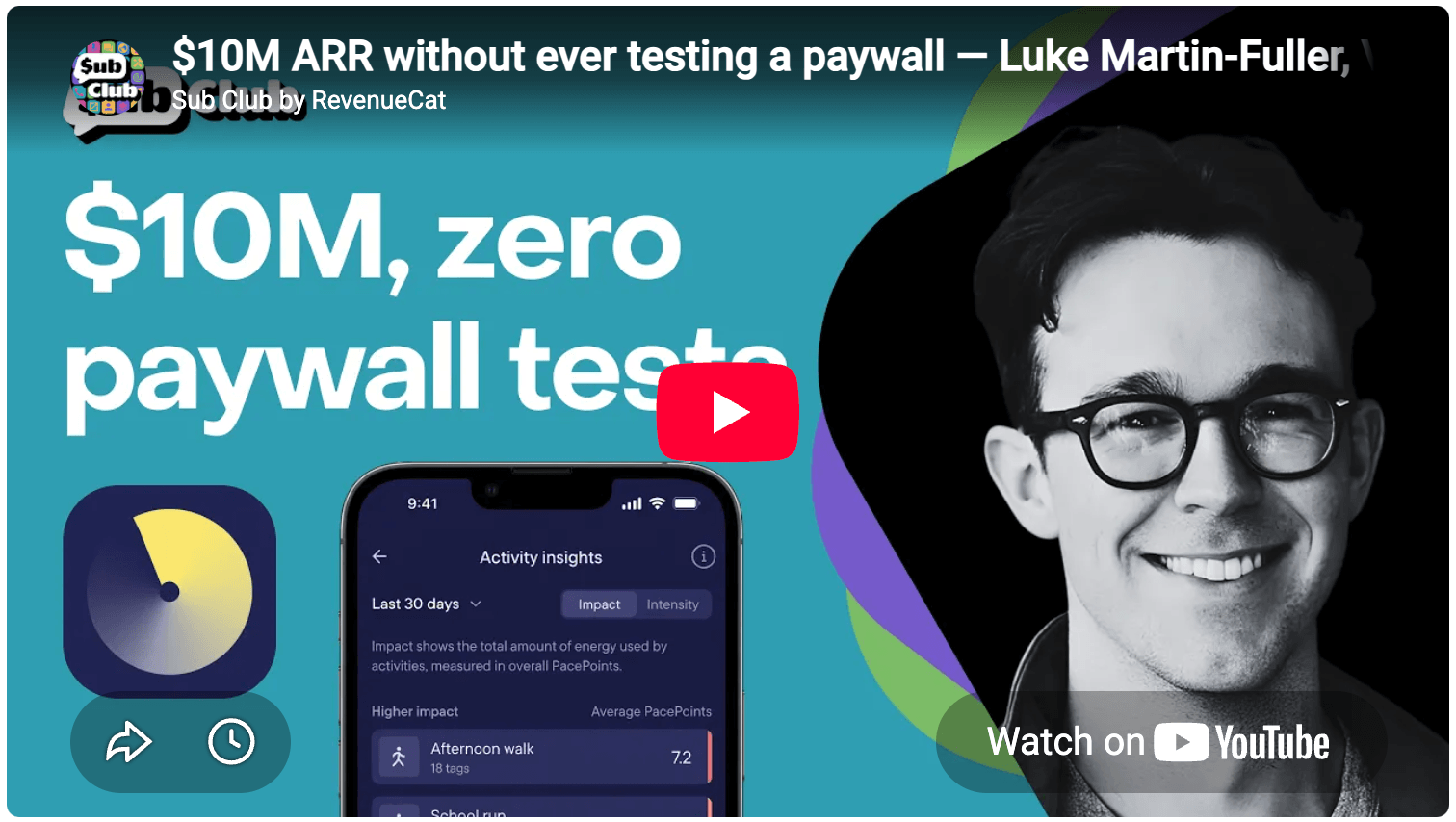
Visible is a wearable activity tracker built for illness, not fitness – more than 300,000 people use it to pace their activity within their energy envelope. It went from $1M to $10M in subscription ARR in two years, on one paid channel. Almost every lever in the subscription growth playbook is still sitting untouched, which is why Luke Martin-Fuller is now hiring someone to pull them.
- $10M ARR with the growth playbook still in the box. No lifecycle email, no paywall tests, no web funnel experiments, no SEO, TikTok or AdWords. One channel – Meta, running user-generated creative – carries paid acquisition, and half of new customers still arrive by word of mouth. The precondition: over a year of giving the product away first.
- The web quiz is partly there to talk people out of buying. It asks whether pacing is even the right fit, and tells some visitors it isn't. Capping conversion is the point – the wrong subscriber wrecks retention, reviews, and your product signal. Median time from landing to purchase is 10 days, and Visible wants that deliberation.
- Members submit an audition tape, then get paid cash for the ads that ship. Customers join a Slack group through the monthly member digest, audition, then get a brief every week. Anything Visible uses earns a flat fee in real money – not credits, not a discount – whether it scales or dies at $10 of spend. Two people run the whole thing.
There's a near-10x retention gap inside the AI app category
By Margarita Loktionova
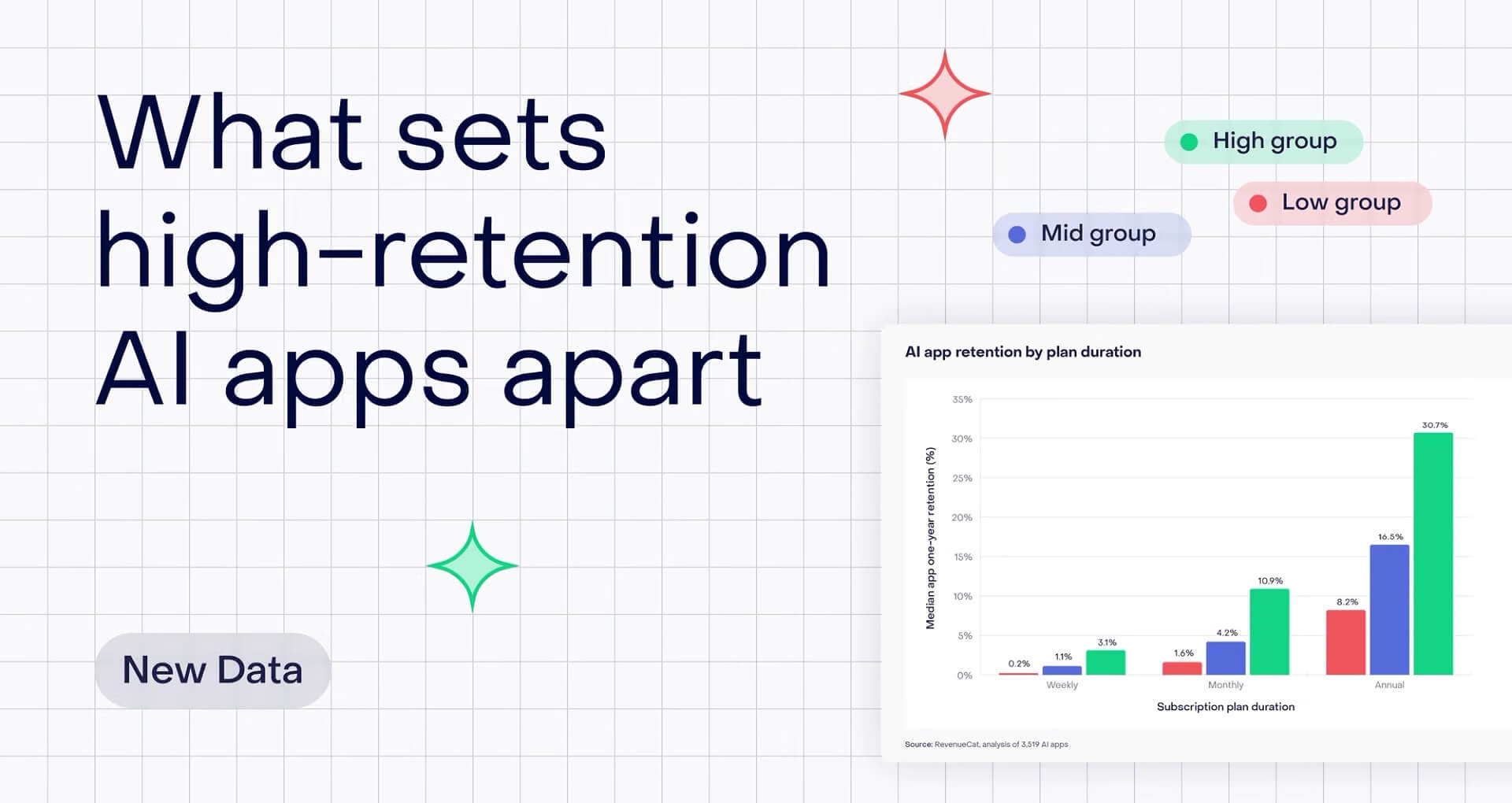
One in four subscription apps is now AI-powered, and they earn 41% more revenue per payer in year one – $30.16 against $21.37 in median first-year LTV. They also churn around 30% faster, which is where most takes on the category stop. Margarita Loktionova ran the numbers on 3,519 AI apps and more than 50 million paid subscriptions, and found the average was hiding a huge spread: the top 30% keep 13.9% of paid subscriptions alive after a year, the bottom 30% keep 1.4%.
- Almost all of the gap opens at the first renewal. On monthly plans, 57.9% of subscriptions at high-retention apps survive renewal one. At low-retention apps it's 30.2%. By the third month the two groups are much closer – 79.5% against 68.5% – so the damage is done in the first billing cycle, and everything after that is fighting over a cohort that's already been decided.
- The low-retention profile reads like the AI gold rush playbook. Apps launched in 2024 or later are 20.2 percentage points more common in the bottom group, and running no trial at all is 23.7 points more common. Higher prices and weekly plans skew low too. The high-retention side leans the other way: subscription-only monetization (16.4 points), a 7-day trial (12.7 points), freemium access (11.4 points), and cheaper subscriptions (7.3 points). These are patterns rather than proof of causation, and some may be consequences of retaining well rather than causes of it.
- The best AI apps retain like they aren't AI apps at all. On annual plans the high group holds 30.7% after a year, exactly the non-AI benchmark and well clear of the 21.1% AI average. On monthly it holds 10.9%, ahead of the 9.5% non-AI figure. There's no retention ceiling on the category – the median is just being dragged down by apps built to convert a spike in attention rather than to give anyone a reason to come back.
Shipaton livestreams
You don't need to be participating in Shipaton to enjoy our many livestreams this year. Here's a small selection that might interest you:
Winning the first 7 days – onboarding, push, and retention
The users you acquire in the first week decide the app's trajectory. The RevenueCat team and a guest from OneSignal on onboarding flows that stick, push that actually drives engagement, and building retention habits from day one.
Ship with Projects, grow with web funnels – Stripe x RevenueCat
RevenueCat's Matt Berry and Dan Pannasch alongside Gordon Diggs and Caleb Scifres from Stripe on building web acquisition funnels that let you sell directly and keep more of the revenue. Worth pairing with Thomas's take in the AMA above.
Building apps for influencer audiences ft. Bria Sullivan
What makes influencer-driven apps different, how to think about audience fit, and how to design an experience that turns followers into users who stay.
Full schedule at shipaton.com/livestreams
Word of mouth was a design decision, not a lucky break
With Romain Lefebvre, creator of Sequel

Sequel tracks movies, TV shows, games, books, and audiobooks in one app across Apple platforms. Romain Lefebvre built it after years of designing fintech UX left him wanting something visual, and grew it on press coverage and users showing it to their friends – with total ad spend of $100 in free Apple Search Ads credits. Both of those channels were things he designed for.
- The detail screen was built to be seen over someone's shoulder. "Artwork first" was one of two requirements Romain wrote down before coding anything – and not only for craft reasons. When someone recommends a film and pulls out their phone, the person looking over should want to know what app that is.
- A capped free tier is a trial with extra steps. V1 limited free users to 25 tracked items total. Romain's read now is that it backfired: people clocked the wall early and treated Sequel as paid software from day one. A limit you'll inevitably hit isn't a free tier – users make that conversion in their heads whether or not you do.
- Press bought the audience; the product earned the recommendations. A MacStories review of V2 is when Sequel took off. What followed needed no outreach: Quinn Nelson of Snazzy Labs polled his audience for underrated apps and found Sequel was by far the most recommended, and David Pierce of The Verge said the same of his newsletter replies.
Watch the full episode on Launched
Industry news
Thanks for reading!

David Barnard
Growth Advocate

Peter Meinertzhagen
Content Lead



1032 East Brandon Boulevard,
PMB 3003, Brandon, FL 33511, USA