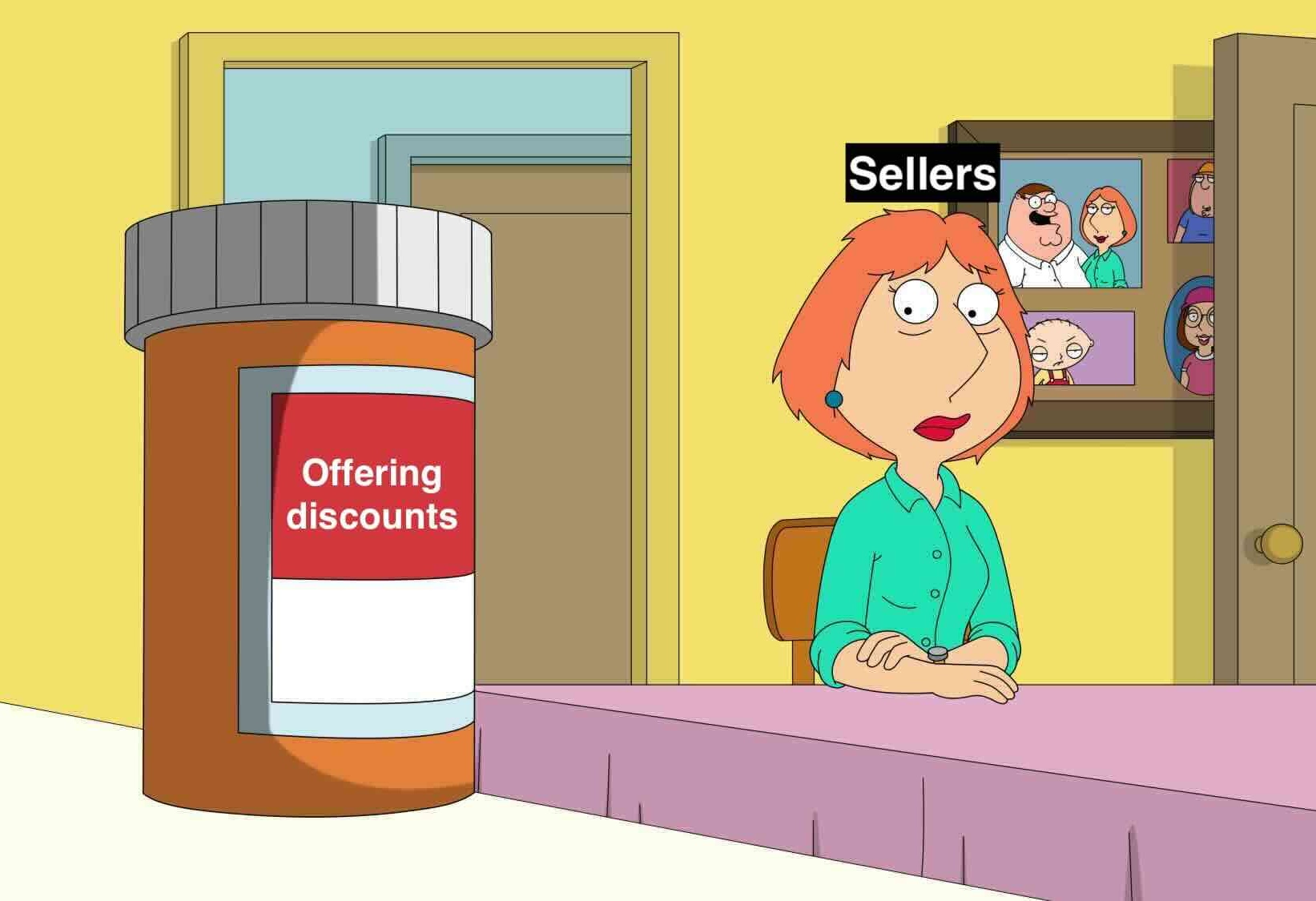
If you drop your price, you’re suddenly in a pricing war over a fair-weather customer. You become just another vendor trying to out-discount the other ones.
Even if you close the deal, they'll ditch you the moment someone else goes lower — because they came for the deal, not for you.
How to avoid the discount trap
If they try to hit you with:
“Well, we’re perfectly happy with what we have now but we might be interested in you — that is, if you can [insert wild request for discounts and perks].”
… they’re probably bluffing.
They’re not happy with the way things are.
Re-focus the conversation on the value you bring and the problem you solve.
If you haven’t already established this earlier in the sales process, this is your moment to do it before the deal dies:
- “Help me understand — what’s still missing in your current solution that brought you here?”
- “If that competitor is such a great fit, what’s making you hesitate?”
-
“What would it mean for your team if we got this right — and how will you measure that value?”
Once you have their buy-in, stand firm:
So it sounds like the solution is worth the investment, wouldn’t you agree? I promise you: we’re giving you the best deal we can. We know this will be the right solution for you.
Another option:
No, we’re not the cheapest solution out there — and we’re not trying to be. We’re not a bargain basement product, and we’re not the most expensive. We think we’re priced fairly because that’s the value we bring to everyone we work with.
And another:
I’ll tell you why we don't offer that type of discount: We like to be super transparent in our pricing. We don't have hidden costs down the line like many of our competitors do.
What you see is what you get with us. But being transparent about prices means that we can’t play the discount game.
If, after all your negotiations, they still threaten to walk — let them! It’s not a bad thing. They just found a great deal you can’t match.
Just think: If it’s not in their budget, they were never your ideal customer anyway.